
Table of Contents
ToggleEmotional Withholding: Relationships that Starves You
There’s a particular kind of loneliness that doesn’t come from being alone. It comes from sitting in the same room as someone who is supposed to love you, trying to reach them, and hitting a wall every. single. time.
You bring something up — he goes quiet. You need reassurance — he changes the subject. You reach for closeness — he finds something to do in another room. You start to wonder if you’re asking for too much, if you’re too needy, if the problem is you.
It isn’t you.
What’s happening to you has a name: Emotional Withholding.
It’s one of the most quietly devastating patterns in a relationship, precisely because it’s invisible. There are rarely raised voices, dramatic scenes, or obvious evidence to point to. It’s just a slow, persistent withdrawal of the warmth and connection you need and deserve in a partnership.
How Emotional Withholding Looks
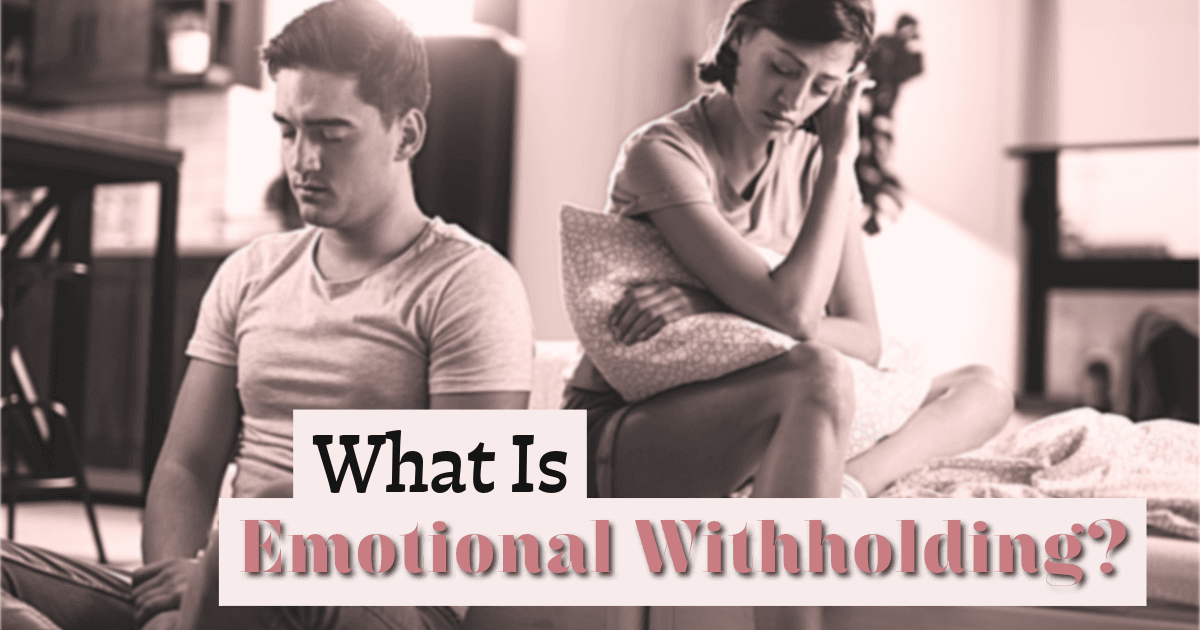
Emotional withholding is a psychological pattern in which one partner consistently suppresses or withdraws emotional availability— refusing to engage in meaningful conversation, share vulnerable feelings, or offer empathetic responses.
It can be conscious or unconscious, but the effect on the person on the receiving end is the same either way: emotional starvation.
It shows up in ways that are easy to dismiss individually, but unmistakable as a pattern:
- Conversations that stay relentlessly surface-level, no matter how hard you try to go deeper
- Affection that disappears the moment there’s any tension
- A partner who shuts down, stonewalls, or leaves the room when emotions arise
- Praise, validation, and warmth being rationed or used as leverage
- Feeling like you have to earn basic emotional attentiveness
- The silent treatment deployed not as a pause, but as punishment
Thomas G. Fiffer, Senior Editor at The Good Men Project, describes it plainly:
“Emotional withholding is someone willingly withdrawing affection with the specific goal to hurt your feelings or control you.”
When that pattern is consistent and directional, it crosses from emotional unavailability into emotional abuse, and it’s particularly insidious because it plays on our deepest fears: rejection, unworthiness, shame, and the worry that we’ve done something wrong.
Emotional Withholding:
The Psychology
You are not overreacting. There is science behind this pain.
Research by Brett J. Peters and Jeremy P. Jamieson, published in 2016, examined what happens when one partner consistently suppresses emotional expression within a relationship.
The findings were clear: Emotional suppression doesn’t just affect the person doing the withholding. It measurably impacts the cognitive, emotional, physiological, and behavioral experience of their partner, too. The ripple effects of being consistently denied emotional reciprocity are real, documented, and significant.
Research also confirms that couples who show affectionate behavior report significantly higher relationship satisfaction, while those who experience consistent emotional withdrawal show markedly higher levels of relational distress. The data backs up what your body already knows:
Emotional connection isn’t a luxury in a relationship.
It is the relationship.
Dr. Sue Johnson, founder of Emotionally Focused Therapy and one of the most respected relationship researchers in the world, writes:
“From the cradle to the grave, humans desire a certain someone who will look out for them,notice and value them, soothe their wounds, reassure them in life’s difficult places, and hold them in the dark.”
When that someone is physically present but emotionally absent — when the person who is supposed to hold you in the dark keeps turning off the light, something deep in your nervous system registers it as a threat. Not metaphorically. Literally.
Not all emotional withholding looks the same, and understanding which version you’re dealing with matters — because it shapes what, if anything, can change.
The 3 Types of Emotional Withholding
1. The Avoidant Withdrawer
This person genuinely struggles with emotional intimacy. Vulnerability feels dangerous to them, often because of early experiences where closeness led to pain. They’re not necessarily withholding to control you — they’re withdrawing to protect themselves. This pattern can shift with the right support, like Emotionally Focused Therapy, which is specifically designed to help partners identify cycles of withdrawal and pursuit and express underlying needs safely.
2. The Conflict-Avoidant Suppressor
This person shuts down during conflict to keep the peace — or so they tell themselves. They go quiet, disappeaering into practicality, then deflect with humor or subject changes. The intention may not be malicious, but as research makes clear, the consequences for you are the same regardless of their intent.
3. The Deliberate Withholder
This is the version that crosses into emotional abuse. Individuals with narcissistic tendencies may understand their partner’s emotions but choose to disregard them entirely, using withholding as a tool of emotional manipulation to maintain control over the relationship dynamic.
In this version, affection and emotional warmth are weaponized — given when you comply, withdrawn when you don’t. It’s a system of control, and recognizing it as such is an act of self-protection.
what it does to you over time
Emotional withholding in a relationship doesn’t just hurt. It reshapes you.
When this pattern persists, it can dismantle your self-esteem and create feelings of worthlessness, confusion, and chronic self-doubt.
You end up believing you are not worthy of having your needs met, and you begin to hand over control, not because you want to, but because the pattern has worn you down into compliance.
Think about what it means to live inside that dynamic. You start pre-editing yourself, stop asking for things, shrink your needs down to a size you think might be acceptable, and then apologize even for those.
You become a skilled reader of moods, scanning constantly for what version of your partner you’re about to encounter. Will it be the warm one or the distant one?
That hypervigilance is exhausting and is, quite literally, a trauma response.
The impact is also physical. Medical research confirms that emotional abuse — which persistent withholding can constitute — has both short- and long-term effects on the brain and body, including anxiety, depression, difficulty trusting in future relationships, and attachment disruption that can outlast the relationship itself.
This is not you being sensitive. This is your body keeping score.
Emotional Withholding:
Why Do we stay when it hurts?
And Why This Makes Complete Sense!
Emotional withholding is not constant. If it were, you would have left earlier.
What makes it so destabilizing is the intermittency — the way warmth shows up just often enough to keep hope alive. A good night that reminds you of who you fell for. A moment of softness that makes you think things are finally shifting. Enough connection to stay, not enough to feel full.
That’s not a character flaw. That’s a very human response to intermittent reinforcement — the same psychological principle that makes variable reward schedules the most compelling and the hardest to walk away from.
Your nervous system wasn’t weak. It was doing exactly what nervous systems do:
Holding onto the good moments as evidence that the connection was real, because it was.
4 Steps to Reclaiming Yourself
1. The path forward starts with naming it.
There is something powerful that happens when you stop calling it “communication issues” or “he’s just not expressive” and call it what it is — Emotional withholding. You give yourself permission to take your experience seriously because you deserve that permission.
2. Stop trying to earn what should be freely given.
Emotional availability in a relationship is not a reward for good behavior. It is a baseline. If you are working harder and harder to unlock basic warmth from a partner, the problem is not your effort level.
3. Get support that is yours alone.
Whether that’s therapy, a trusted group of friends, or a community of women who understand this pattern, you need a place where your reality is validated without having to argue for it. Individual therapy can be particularly valuable for rebuilding self-trust and distinguishing between patterns in this relationship and what you actually deserve.
4. Consider couples therapy — with clear eyes.
Emotionally Focused Therapy has strong research support for helping couples where one partner tends to withdraw, but it requires both to genuinely want to change the pattern. If your partner dismisses the idea, minimizes your experience, or uses your attempt to get help as another opportunity to withdraw, that is important information.
5. Trust the Pattern more than the apologies
A person who is genuinely working on emotional availability shows you that through consistent change over time, not through promises in the moment of conflict.
Watch what they do when things are calm, when you’re vulnerable, when you need them for something ordinary and small. That’s where the truth lives.
“The most important things in the world is to learn how to give out love and to let it come in”
You deserve love that comes in, not love that trickles through when conditions are perfect, not warmth that evaporates when you need it most, not connection you have to negotiate for every single time.
Real love — the kind that actually nourishes you — is consistent, responsive, and unconditional.
You are Not Asking for too much
Needing emotional availability from your partner is not neediness. It is not a weakness. It is not a character flaw or an unreasonable expectation. It is the most human thing there is.
Research from Dr. Sue Johnson consistently highlights that mutual emotional support is foundational to strong relational bonds — and when that balance is off, the partner doing all the reaching is at serious risk of burnout.
The exhaustion you feel is the direct result of reaching for someone who keeps moving just out of range. That is not sustainable, and it is not something you should have to sustain.
You are allowed to want a partner who meets you, allowed to name what has been missing, and allowed to decide that a relationship where you feel chronically emotionally starved is not the relationship you will settle for.
“You teach people how to treat you by what you allow, what you stop, and what you reinforce.”
The most powerful thing you can do right now is believe — really believe — that you deserve more than what you’ve been getting. Once you know that, truly know it, the dynamic that’s been shrinking you loses its grip.
Your hunger for connection is not a problem to be managed. It is a compass. Let it point you somewhere worthy of you.
Dig Deeper
For further reading on emotional availability, attachment, and healing, explore the work of Dr. Sue Johnson.
You may also want to take a look at Psychology Today’s library on emotional withholding.
Emotional withholding rarely exists in isolation. It often appears alongside other unhealthy relationship behaviors that can affect trust, communication, and emotional safety.
Emotional withholding is often just one piece of a larger relationship dynamic. If you’re trying to understand what happened and identify potential red flags, explore our comprehensive guide on toxic relationship patterns for additional insights, resources, and support.