
What We Never Were
If you're anything like me, you have heard so many terms over the past few years for the different types of relationships people today have. One term in particular had me slightly puzzled, although once I learned the definition, it really made complete sense to me - So, What is the meaning of a situationship?
Let me start off with an example of a situationship from personal experience, before I knew there was even a word for it -
I found out on a Tuesday, the most unremarkable day of the week, which somehow made it worse — that something that large could end on a Tuesday, in a text, with a period at the end as if it were just some everyday type of statement.
I sat in my car in the parking lot of a grocery store and cried the way you cry when you can't even explain to anyone why you're crying -
because there's no word for the loss of something that was never officially mine...
We had met at a friend's New Year’s Eve party. It was the kind of night that felt lit from within, and Brandon had laughed at something I said before I even finished saying it — the way only someone already paying attention does.
He texted me that same night, and from there, we started a whirlwind romance. By February, we had developed a language made entirely of inside jokes and 1 a.m. voice memos and the kind of chemistry that gives you an unmatched kind of high.
What looked like intimacy from the outside — his hand at the small of my back at parties, his toothbrush in my bathroom, the way he said “you're different” like it was a promise and not just an observation —
but intimacy without the commitment is just closeness with an expiration date I was never given.
I told myself the label didn't matter, that I wasn't one of those women who needed a title, not realizing I was already using the energy it takes to convince yourself of something you don't quite believe.
I started minimizing my own feelings to a size he seemed comfortable with, started measuring my words before I texted them, and performed a casualness I truly didn't feel because I was terrified that needing more would make me into the problem.
The anxiety moved in quietly, folded itself into my daily life — I caught myself rereading his messages, looking for proof in either direction, of something I could hold onto, something that proved wrong what I already knew.
When it ended — when he said, “I don't think I'm in a place for this,” a sentence so formless it barely had anything to push back against — I realized I had spent eight months being chosen partially. A filler until what he really wanted came along.
What broke me wasn’t that he didn't love me— it was that I started to understand my own worth through the lens of his hesitation. I found a way to heal, eventually, but first,
I had to mourn a relationship that the world wouldn't even recognize as one.
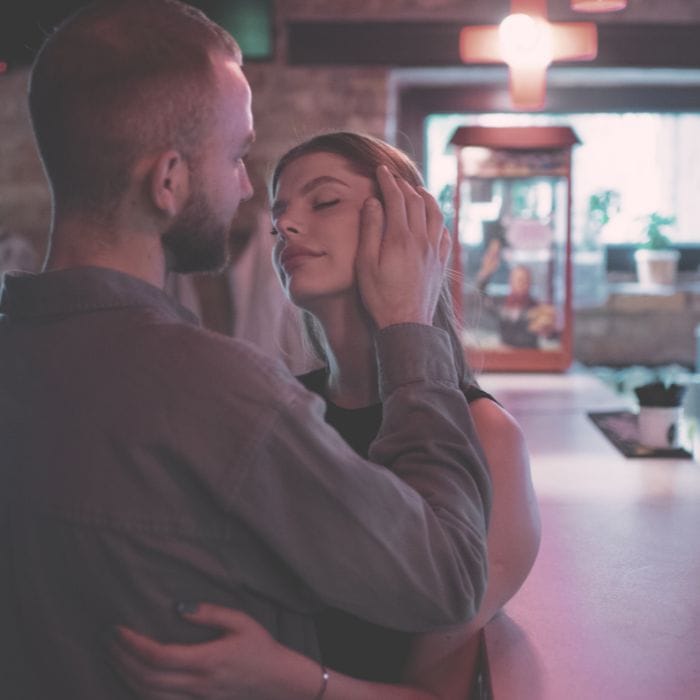
What Is the Meaning of a Situationship?
The word itself is almost too casual for what it describes. A situationship is a romantic or sexual relationship that is undefined and noncommittal — more than a friendship, less than a committed partnership, and almost entirely built on the things that are never said out loud. It lives in the gap between what you’re feeling and what either of you is willing to name.
Academic research defines it as a romantic relationship with no clarity or label, low levels of commitment, but with similar romantic behaviors as established couples — affection, time, physical closeness, intimacy. Everything that looks and feels like love, except the one conversation that would make it real.
What makes a situationship different from a casual fling is that emotional weight. Writer Carina Hsieh, who helped popularize the term in 2017, described it as “a hookup with emotional benefits” — and that phrase lands differently depending on which side of the equation you’re sitting on.

How Do I know If I'm in a Situationship?
You have the freedom to do whatever you want, but you are constantly managing the emotional complexity of an undefined connection that drains your mental and emotional energy.
That's what a situationship actually costs. Not just time, but the cognitive and emotional bandwidth of forever translating ambiguity into something livable.
Your connection remains compartmentalized — separate from work events, family gatherings, friend circles. You exist in a specific, curated version of their life and you have learned, slowly, not to ask why the door to the rest of it stays closed.
Hot one week, distant the next, no explanation offered for either. Consistency is absent, making it nearly impossible to predict your partner’s behavior — and that unpredictability breeds a particular kind of insecurity that compounds quietly over time. You start editing your texts and monitoring your own feelings like they’re the problem.
You make plans, but never too far into the future. You know their coffee order and their childhood wounds and the sound of their laugh at 2 a.m. but you haven't met their mother, and you've noticed you're never quite sure whether to introduce them at a party or stay put in that awkward in-between.
If you've ever described someone using phrases like "we're talking," "it's complicated," "we're just seeing each other," or the ever-evasive "it's not really a label situation," you are likely already in one.

Is A Situationship The Same
As Dating?
Yes and no — and the vast difference between those two answers is exactly where the confusion lives.
Technically, you are spending time with someone, you are likely being physically intimate, you are building a shared language and a set of memories that belong only to the two of you, which by most reasonable definitions sounds a great deal like dating!
Traditional dating carries with it an implied direction — a sense that you are moving toward something, feeling each other out for the possibility of something more defined and more permanent.
A situationship removes that direction entirely, or at least refuses to acknowledge it, leaving both people in a kind of relational limbo where all the experiences of dating are present, but none of the forward momentum is guaranteed. You are doing all the things that dating people do, without any of the clarity that dating is supposed to eventually provide.
Think of it this way — dating is a road with a destination you're navigating toward together, even if you haven't agreed on the final stop yet. A situationship is the same road, but no one will admit they're driving, and every time you ask where you're going, someone changes the subject.

Is A Situationship Bad?
A situationship doesn’t have to be a wound. When both people genuinely want the same thing — the warmth of connection without the architecture of commitment — it can offer the thrill of romance, the ease of friendship, and the freedom of independence, all at once. The key word is both.
When it’s truly mutual, it can be something that enriches rather than depletes. A situationship can also serve as a trial phase — a slower, lower-pressure way of getting to know someone before stepping into something formal, for people who need time to trust, who have been burned before, or who are simply in a season of life that doesn’t lend itself to something defined.
Ambiguity isn’t always avoidance. Sometimes it’s just caution. A clinical psychologist notes that situationships require less emotional investment than committed relationships and can offer a stress-free way to experience intimacy — when both people are honest about what that means.
The operative word, always, is honest.

What Are the Negative Effects
of A Situationship?
The uncertainty, lack of commitment, and chronic ambiguity of a situationship can lead to anxiety, frustration, and depression — not because you’re fragile, but because your nervous system is doing exactly what it’s designed to do: it is responding to an environment that withholds safety. You are not overreacting. You are reacting.
When a situationship ends, it creates what psychologists call “ambiguous loss” — a form of grief that is particularly difficult to process because there was no clear beginning, no formal ending, and no socially acknowledged relationship to mourn.
There’s no clean story to tell. People don’t understand why you’re hurting over something that was never official.
But it was official to you. That is the part that deserves to be said plainly, without apology.
Research confirms that people in situationships are, for the most part, emotionally and sexually invested even without a formal label — which means the feelings were real, and the loss is real, and you are allowed to grieve it like it is.

How Does it usually End?
Most situationships end the same way they lived — ambiguously. Communication slows, then stops. There is no conversation, no door closing, just a gradual fading that leaves the other person standing in a room that quietly emptied. This is ghosting in its most disorienting form: you can’t even be sure it’s over, because it was never entirely defined as begun.
Other times, one person finally asks the question they’ve been swallowing for months, and the answer is kind but firm, and somehow that almost makes it worse — because now you know it was never going where you hoped, and you gave it so much of yourself anyway.
Creating closure through intentional conversation is crucial for healing, even when — especially when — the relationship was never given a name.
And occasionally — not always, but genuinely — a situationship becomes something real. The timing finally aligns, someone finally speaks, and what was uncertain becomes chosen.
The risk is that the other outcome is also possible: one person pushes for clarity and gets a gentle rejection, having invested deeply in something that was never going to be theirs. The question worth asking yourself, before you get there, is whether you’re willing to live with both possibilities.

Here's what you really Need
to Know
You deserve to know where you stand. Not because you’re demanding or difficult, but because clarity is a form of respect — and its absence is always telling you something.
Being clear about your feelings and relationship goals isn’t pushing someone away; it’s offering them the chance to meet you where you actually are.
The situationship is named something that has been happening to people, particularly women, for a very long time — the experience of being held close but not held accountable for, of being wanted but not chosen. Naming it doesn’t make it okay. But it does make it harder to pretend it isn’t what it is.
The meaning of a situationship at its core is this: two people in the same space, wanting different things, and finding it easier to stay in the middle than to say so.
You are not responsible for managing someone else’s ambivalence. Your only job is to know what you want — and to stop pretending you don’t.
You are not too much for wanting something real.
You were just in the wrong situation — and now you know exactly what to call it.