
Table of Contents
ToggleGhostlighting
An emotional-somewhat psychological dive into one of the most confusing modern relationship trends
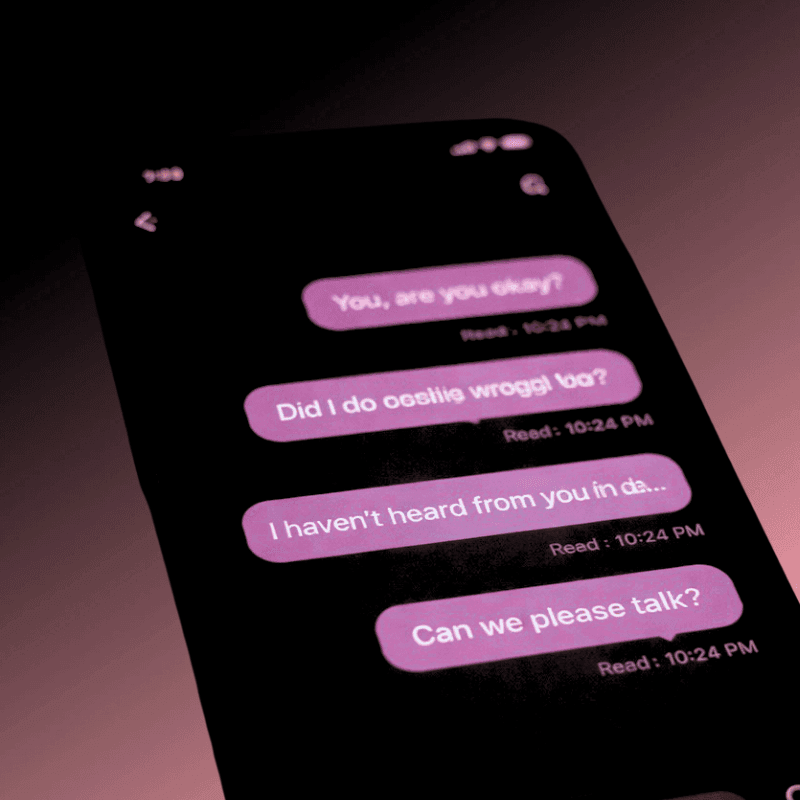
If you’ve ever been left in a lurch, refreshing your messaging app for texts that never come, you know the sting of ghosting.
If you’ve ever been manipulated in a way that made you question your own memory or perception, you know how insidious gaslighting can be.
Unfortunately, there’s a newer, harsher hybrid in the toxic relationship lexicon: ghostlighting — and it feels infinitely more destabilizing than its individual parts!

How’s Ghostlighting Different Than Ghosting?
Let me define ghostlighting in the simplest way—it’s when someone disappears without explanation (classic ghosting), then returns later, acting as though they never left, intentionally crafted to make you feel like the one who misremembered the entire thing situation, overreacted – imagined it…
Does this sound familiar?
If it does, then you must be thinking of that time you were made to feel crazy when he gaslit you.
Ghosting + gaslighting = ghostlighting.
It’s a blend of abandonment and psychological manipulation, and it chips away at your sense of certainty.
To understand why it hurts so deeply, we need to look at the emotional and neurological toll — how it differs from the painful experiences of ghosting and gaslighting.

Ghosting is leaving someone without warning or closure — no texts, no explanations, no goodbye…
It hurts because you’re left in ambiguity: open loops in the brain make you replay conversations and search for meaning that may never come.
Gaslighting, on the other hand, is a systematic pattern of psychological manipulation meant to make someone doubt their own reality, memory, or sanity.
It’s named after the 1944 film Gaslight where a husband manipulates his wife’s environment to make her question her sanity.
Gaslighting usually unfolds over time, chipping away at a person’s confidence piece by piece.
Ghostlighting marries the emotional abandonment of ghosting and the cognitive distortion of gaslighting into one corrosive experience — that’s where the emotional double‑tap hits the hardest!
The Painful Effects of being Ghostlit
When someone ghosts you, the pain is predictable in its ambiguity. You wonder, you hurt, you look for closure that never comes – but eventually, you move into acceptance.
When someone gaslights you, the pain is erosive over time. You start doubting yourself before you even realize it. It’s emotional and mental torture that, unfortunately becomes the norm, and well that can turn into a million other issues that were not getting into right now.
When someone ghostlights you? You endure both at once:
First, a painful abandonment that leaves you confused and rejected. You’re rarely given the chance to move on to acceptance, because the ghoster shows his face just before you’re to that point.
Then, when they do return, they deny or minimize that abandonment, causing you to start questioning your memory of the hurt in the first place.
It’s not just being ignored — it’s being made to think you imagined the negligence you clearly felt. That’s a psychological whiplash few relationship experiences can rival!
Dr. Ramani Durvasula, a clinical psychologist and expert on narcissistic abuse, explains it well:
“When someone disappears and then returns denying they ever left, they’re essentially asking you to distrust your own memory and perception.” That’s emotional instability meets cognitive distortion — a combo that undermines both heart and mind.”
Common Gaslighting Tactics
- Accusing You of Being Unstable or Incompetent
- Lovebombing
- Unpredictable Behavior
- Isolation
- The Silent Treatment
Inconsistency Breeding Trauma Bond
Therapists and relationship experts observe that inconsistent communication — what parenting researchers call, “intermittent reinforcement” creates stronger emotional bonds than consistent negativity.
When this inconsistency is paired with denial or minimization, it creates a cycle where the person keeps seeking answers and validation, often long after the relationship has ended.
This mirrors some patterns observed in trauma bonding, where unpredictable affection increases attachment — but here it’s wrapped in rejection and self‑doubt.

Ghostlighting & The Language
of Modern Relationships
Words matter — and so does how they’re used.
Terms like ghostlighting have gained traction lately because they capture something many people feel deeply but couldn’t previously name. That’s part of why search interest in the term has soared — people recognize this pattern in their own lives and are desperate to understand it.
The thing is, naming a phenomenon doesn’t minimize its pain.
Ghostlighting lingers in your inner dialogue long after the texts have stopped, because it undermines both your emotional trust and your confidence in your own perception.
That’s what distinguishes it from ghosting alone and even from gaslighting: ghostlighting doesn’t just hurt your heart, it hijacks your sense of self‑trust.
Understanding how ghostlighting works is the first step. The next is learning to trust your own perception again. That’s not naive self‑confidence — it’s an emotional reclamation.
Don’t let these ghosters, gaslighters, and ghostlighters fool ya!
Your experiences are real.
Your emotions are valid.
And no one has the right to rewrite your past or make you doubt your lived reality.